
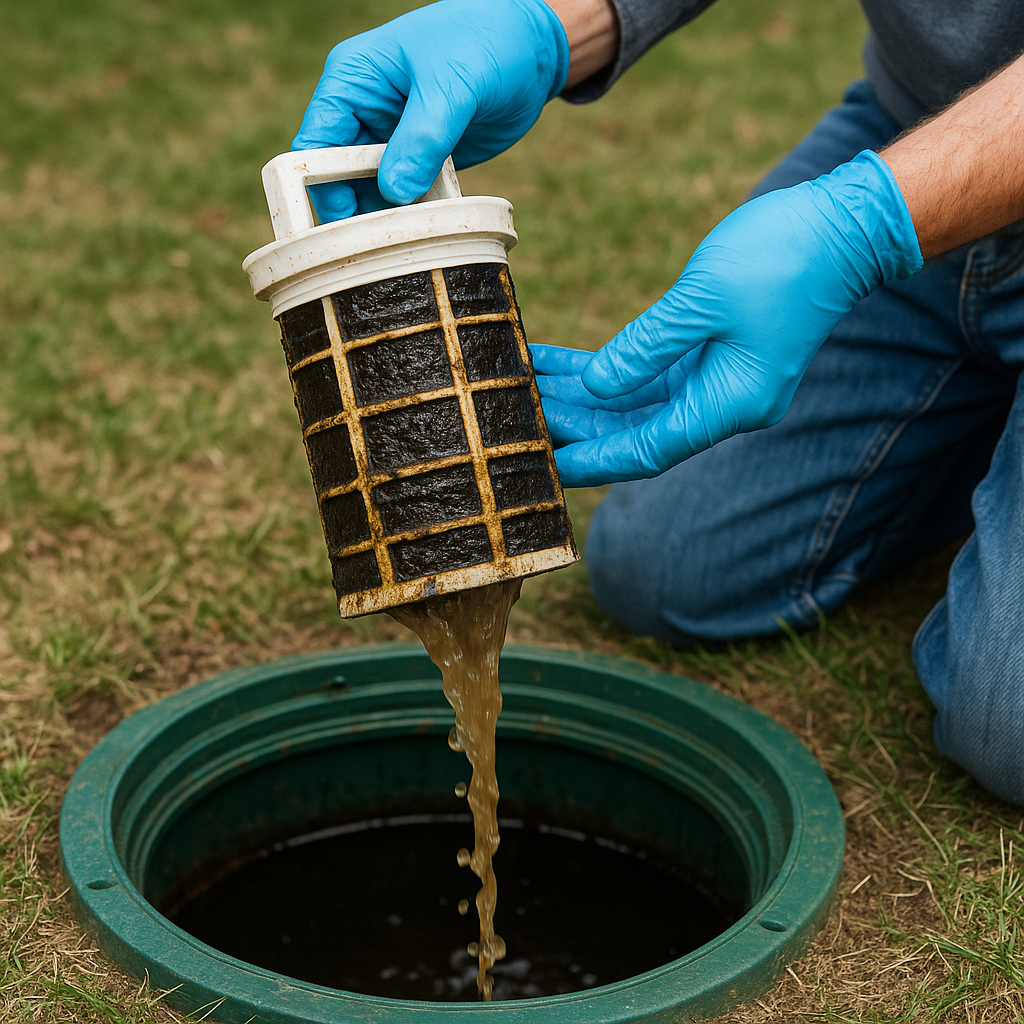
The Small Part That Makes a Big Difference
If you own a septic system, you’ve probably heard about effluent filters — but are they really necessary?
At Summit Septic Solutions, we’ve seen firsthand how this small component can make the difference between a long-lasting, healthy system and one that fails prematurely. Let’s break down what they do, their benefits, and when they might not be right for every homeowner.
What Is an Effluent Filter, Anyway?
An effluent filter sits inside your septic tank’s outlet baffle, filtering wastewater before it flows to your drainfield.
Its job is simple: catch solids before they leave the tank. By keeping grease, lint, and other materials out of your drainfield, it protects your soil from clogging — and your wallet from expensive repairs.
✅ The Pros of Effluent Filters
1. Protects Your Drainfield
By trapping solids, effluent filters prevent clogs and backups, extending the life of your entire system.
2. Saves You Money
Replacing a damaged drainfield can cost thousands. A filter and periodic cleaning can prevent those issues for a fraction of the cost.
3. Improves Treatment Efficiency
Effluent filters ensure that only cleaner water leaves the tank, reducing stress on your drainfield and helping it treat wastewater more effectively.
4. Extends System Life
With cleaner flow and fewer solids escaping, your system stays functional longer — meaning fewer repairs and replacements.
5. Simple to Maintain
Filters are easy to clean and replace during routine service visits — typically once or twice a year.
⚠️ The Cons of Effluent Filters
1. Requires Regular Maintenance
Neglecting to clean your filter can cause slow drains or even backups inside your home.
2. May Trigger Alarms
Advanced systems with alarms will alert you when the filter is clogged — useful, but sometimes unexpected.
3. Not a Substitute for Pumping
Effluent filters don’t eliminate the need for regular tank pumping or inspections. They’re a supplement, not a replacement.
4. Compatibility with Older Systems
Most tanks can be retrofitted, but some older concrete tanks may need modification to properly fit a filter.
So… Are They Worth It?
For nearly every homeowner, yes — effluent filters are well worth it. The minimal maintenance they require is far outweighed by the protection they provide.
Think of it like an air filter for your septic system: easy to overlook, but essential for keeping everything running smoothly.
When to Clean or Replace a Filter
Summit Septic Solutions recommends:
- Inspecting or cleaning every 6–12 months
- Cleaning during every tank pumping
- Calling for service if you notice slow drains, gurgling pipes, or surface moisture around your tank
Our team can inspect, clean, or replace your filter as part of regular maintenance.
Can You Add One to an Existing System?
Yes — and it’s one of the best upgrades available for existing septic systems in Klickitat County.
Installing a filter takes just one service visit and can significantly extend your system’s lifespan.
Trusted Septic Care for Klickitat County
Every property is different. From rocky soils near Lyle to sandy areas around Goldendale, the right maintenance plan depends on your location and system type.
That’s why Summit Septic Solutions provides personalized inspections and filter maintenance to keep your septic system working efficiently all year long.
Keep Your System Clean, Clear, and Protected
Effluent filters may be small, but they play a huge role in protecting your septic investment.
📞 Contact Summit Septic Solutions today to schedule an effluent filter inspection or installation before spring — and enjoy peace of mind knowing your system is built to last.