
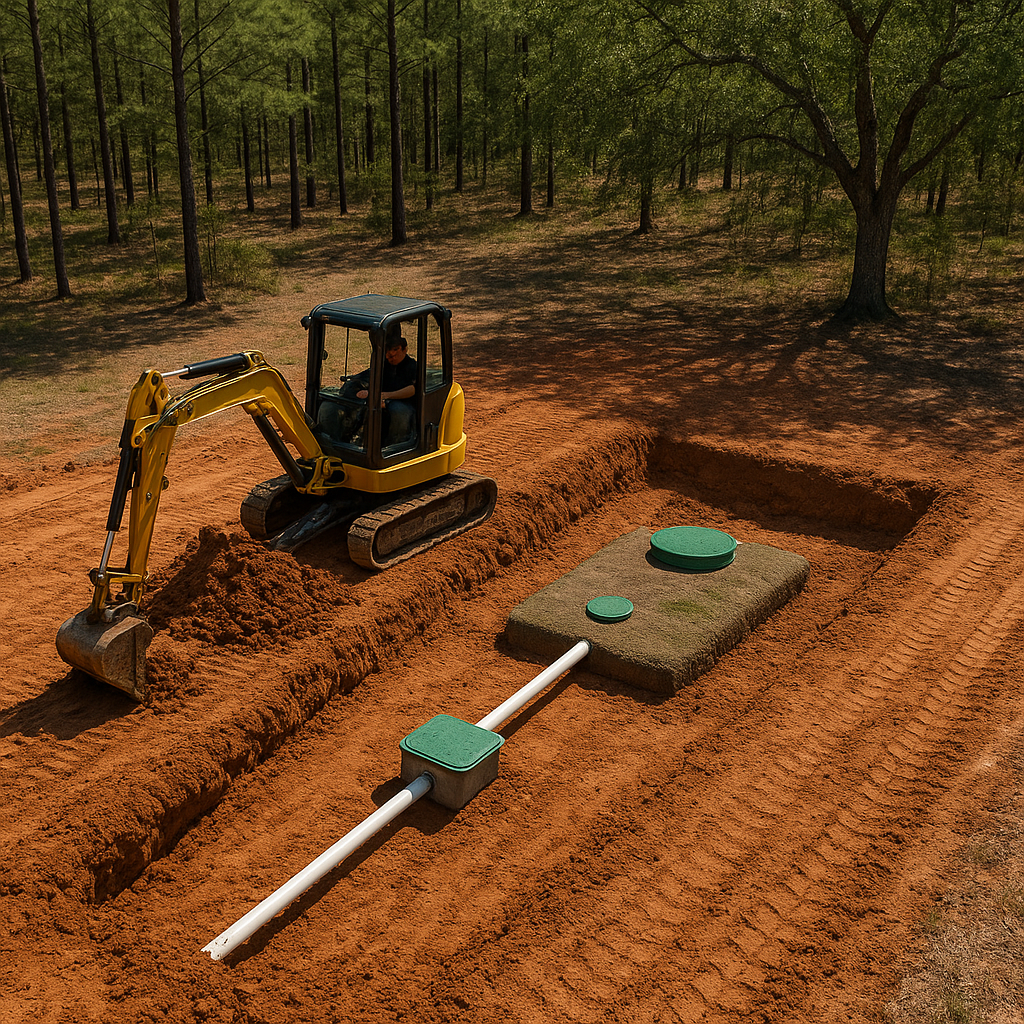
When planning a new home on rural property, it’s easy to focus on the view, layout, and driveway. But beneath the surface, your septic system design has one of the biggest impacts on how your site will function.
Before breaking ground, thoughtful planning ensures your septic system performs efficiently, meets local health codes, and doesn’t limit future improvements.
At Summit Septic Solutions, we help property owners plan every phase—from soil evaluations to final installation—so their septic system works in harmony with their home site.
1. Start with a Site Evaluation
A septic system isn’t a one-size-fits-all design. The process begins with a site and soil evaluation, completed by a licensed designer.
Key factors analyzed include:
- Soil Type & Permeability: Determines how quickly effluent can filter through the ground.
- Slope & Drainage Patterns: Affects where drainfields can safely disperse wastewater.
- Setbacks: State and county codes require minimum distances from wells, property lines, and water bodies.
- Depth to Groundwater or Bedrock: Impacts whether a conventional or alternative system will be used.
👉 Pro Tip: Perform your site evaluation before finalizing your house or driveway location. It’s easier to move a building site than redesign a septic system later.
2. Choosing the Right System for Your Property
Once the soil and site data are collected, the designer determines the appropriate system type.
Common recommendations include:
- Gravity Systems for well-draining soils and level terrain.
- Pressure Distribution Systems where soils are shallower or slopes are moderate.
- Mound or Sand Filter Systems when there’s limited depth to groundwater.
Each system requires specific trench spacing, setbacks, and elevations—factors that influence where your house, garage, and driveways can be placed.
3. Septic Design and Home Layout Go Hand-in-Hand
A common mistake is placing the house or garage before knowing where the septic system will go.
Avoid these issues by planning together:
- Drainfield Location: Reserve open, undisturbed soil for this area—avoid driveways, patios, or large trees nearby.
- Tank Access: Plan tank placement so it’s easily accessible for future pumping and inspection.
- Slope Direction: Keep the home site high enough for gravity flow whenever possible.
- Future Expansion: If you plan to add a shop or ADU later, leave space for future drainfield replacement areas.
4. Working with Your Septic Designer and Installer
The best results come from early collaboration between your builder, designer, and septic contractor.
Summit Septic Solutions coordinates directly with homeowners and designers to:
- Identify suitable system types and layout options.
- Optimize placement for minimal excavation impact.
- Ensure county health requirements are met before permitting.
5. Protecting Your Investment
Good site planning protects more than just your septic system—it safeguards your home and property value.
A properly placed system:
- Prevents flooding and backups.
- Keeps landscaping intact.
- Reduces long-term maintenance costs.
Conclusion
Septic design should be one of the first steps in your site planning process—not the last. With proper evaluation and layout coordination, you’ll ensure your home site remains functional, compliant, and efficient for decades to come.
At Summit Septic Solutions, we specialize in helping homeowners design, plan, and install septic systems built for long-term reliability.
👉 Schedule a Site Evaluation Today or learn more about our Excavation & Site Prep Services.