
Introduction
If you live outside of a city sewer area, your home likely depends on a septic system. While it works quietly underground, understanding how it functions helps you maintain it properly and avoid costly problems.
1. What a Septic System Does
A septic system’s main job is to collect, treat, and safely disperse household wastewater. Every time you flush, wash dishes, or do laundry, water flows out of your home into the septic tank.
2. The Main Components
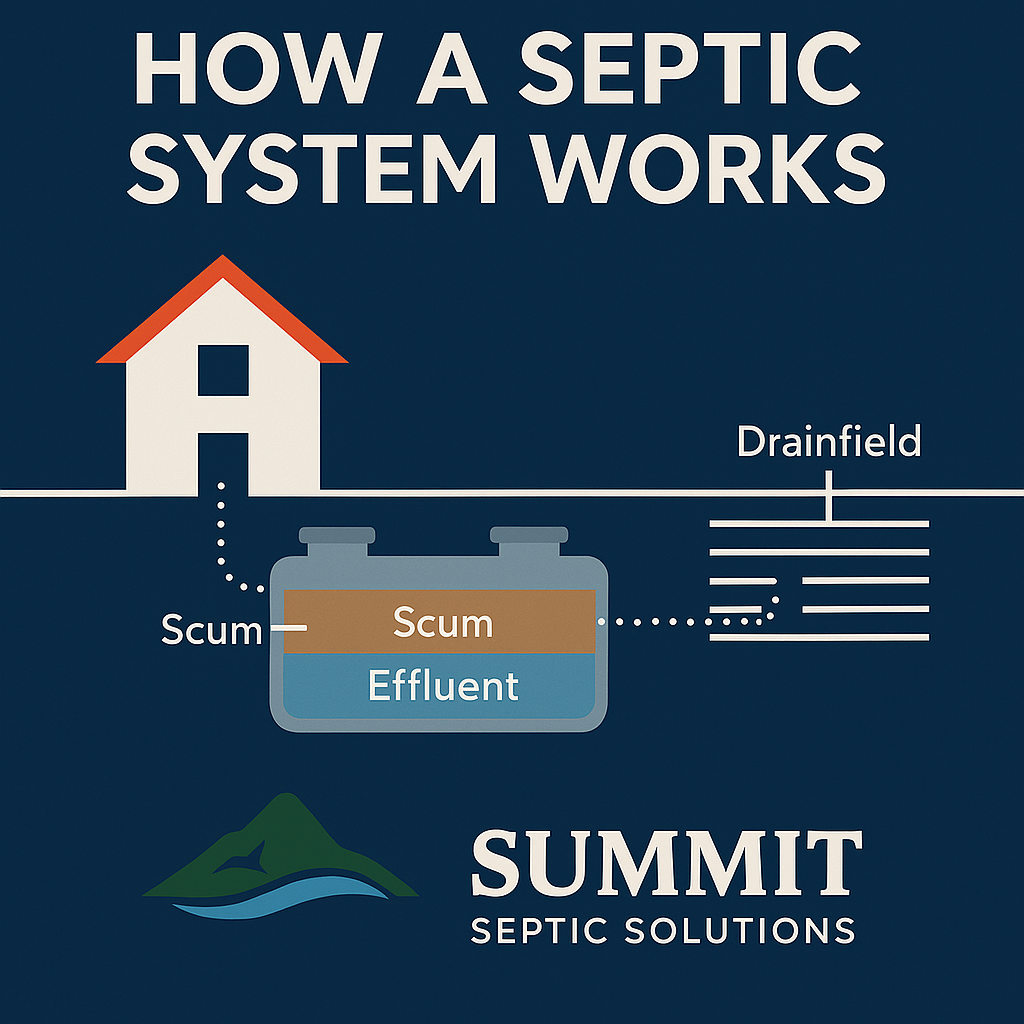
- Septic Tank: This buried container holds wastewater long enough for solids to settle to the bottom (sludge) and oils to float to the top (scum).
- Baffles: These internal barriers help prevent solids from escaping into the next stage of treatment.
- Effluent Filter: Installed at the tank’s outlet, this filter traps fine solids before they reach your drainfield.
- Drainfield (Leach Field): A network of perforated pipes that allow filtered wastewater to absorb naturally into the soil.
- Soil Treatment: The soil acts as a final filter, removing harmful bacteria, nutrients, and contaminants.
3. How the Process Works
- Wastewater enters the septic tank, where solids settle and grease rises.
- Bacteria break down solids inside the tank, reducing waste volume.
- Effluent (liquid wastewater) flows through the effluent filter to the drainfield.
- The drainfield disperses water into the soil, where natural filtration occurs before returning to groundwater.
4. Why Understanding Your System Matters
Knowing how your septic system works helps you:
- Avoid flushing materials that can clog your tank or pipes.
- Recognize early warning signs like slow drains or gurgling pipes.
- Schedule regular tank pumping and filter cleaning.
A properly maintained system can last 30–40 years or more—neglect, however, can cut that in half.
5. Maintenance Tip
Have your tank inspected every 3–5 years, depending on household size and usage. Keep records of all maintenance and pumping dates.
6. Call to Action
Whether you’re new to septic ownership or need a maintenance check, Summit Septic Solutions can help keep your system running smoothly.
👉 Request Your Free Estimate or visit our Drainfield Services and Effluent Filter Maintenance pages for more homeowner resources.